
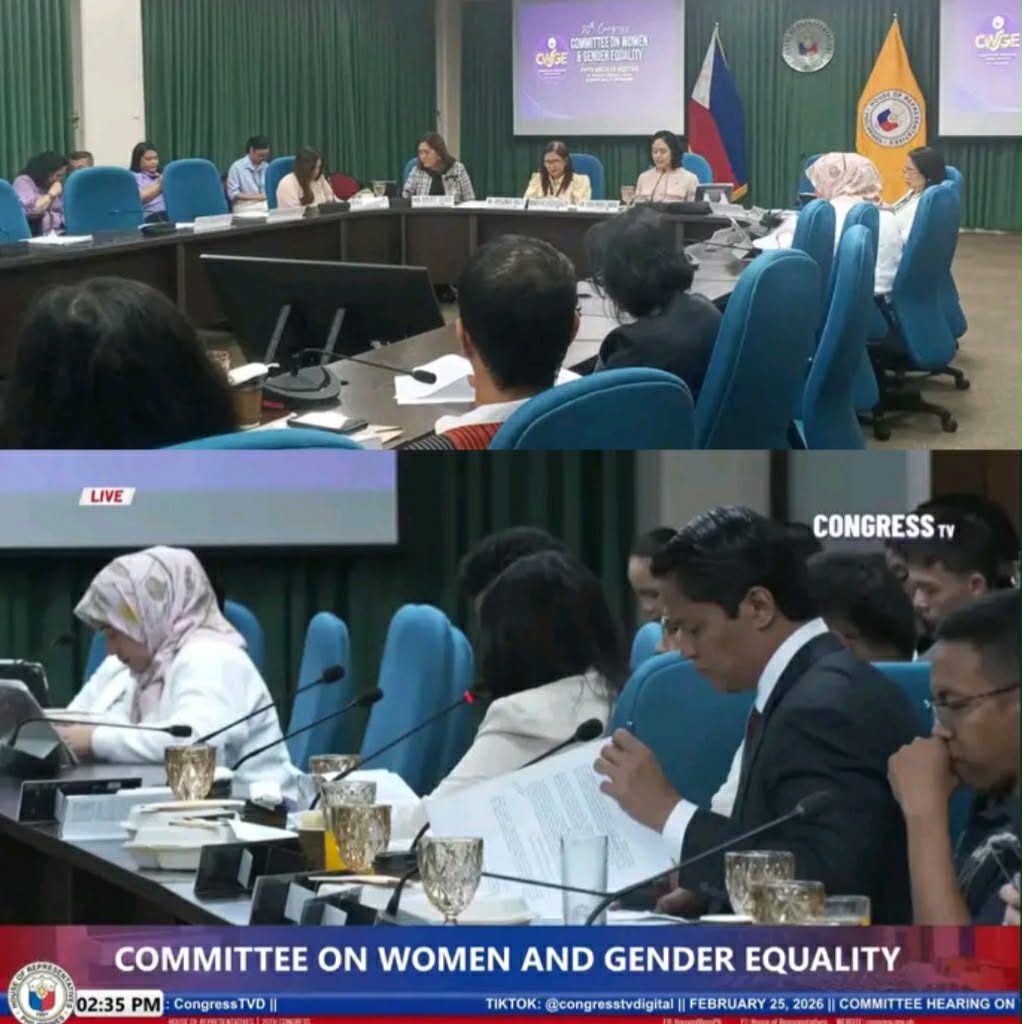
QUEZON CITY (February 25, 2026) – During a high-stakes hearing of the House Committee on Women and Gender Equality, the Conservatives of the Philippines (COP) formally registered their opposition to several House Bills (HB00591, HB01392, HB02014, HB02431, HB06031, and HB07018) that seek to amend the Family Code by removing the husband or father as the primary decision-maker in the home. Vice Chairperson Rep. Isabelle Zamora presided over the deliberations on the "Fundamental Equality" bills. The COP stood as a leading voice for maintaining the traditional family structure.
The Father as the Natural Head of the Home
Representing the COP, Atty. Angelo De Alban emphasized that the role of the father as the head of the family is an "enduring natural reality" rather than an outdated tradition. He presented data from the 2022 National Demographic and Health Survey (PSA) showing that 75% of Filipino households (3 out of 4) are currently headed by fathers.
"Dismissing this reality would render the law out of touch with the people and silence the majority of household heads in the Philippines."
Supremacy of Filipino Law and Tradition
The COP position paper underscored the Supremacy of Domestic Law over international treaties. Citing Supreme Court precedents like Bayan Muna v. Romulo, the group argued that any international mandate attempting to change the Family Code must be held invalid if it conflicts with the 1987 Philippine Constitution (Article 2, Section 12).
Strategic Proposals for Family Protection
Beyond opposing the removal of the father's headship, the COP introduced several measures designed to modernize the Family Code without compromising its core principles:
Combatting Pedophilia and Grooming
The COP proposed increasing the marriage age from 18 to 21, arguing the prefrontal cortex is not fully developed until the mid-20s, creating a window for exploitation.
Protecting Property Transactions
Regarding community property, the COP argued for a designated spouse or parent to administer assets, warning that requiring joint consent for every transaction would hurt third parties acting in good faith.
Emergency Authority for Children
In matters of health, welfare, or security, the COP insisted on a designated parent with the final say, arguing that requiring a court case to settle disagreements during a crisis would "prolong and drag the problem to the detriment of the child."
Preserving the Filipino Family Culture
The COP concluded its presentation by urging the House to address family issues without rupturing the "natural reality" of the home. They called for a more in-depth study and earlier invitations for resource persons to ensure Filipino spirituality and tradition are preserved in future deliberations.